


The Red Book
A concise introduction to C. G. Jung’s Liber Novus
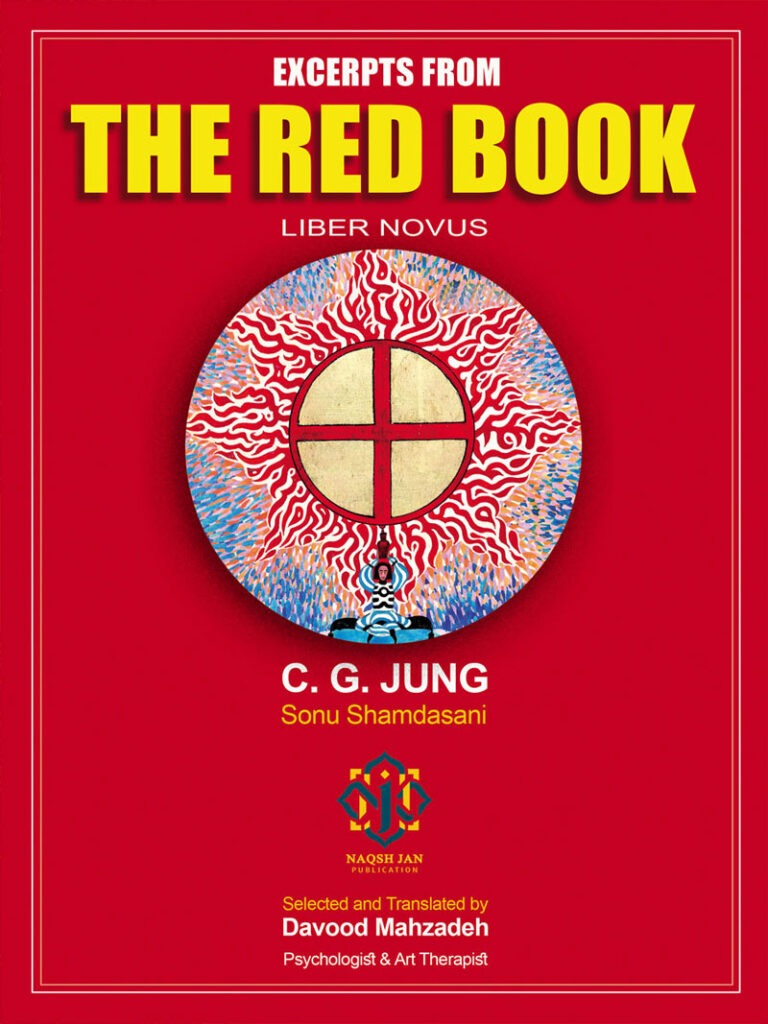
Book Details
Author: C. G. Jung
Translated from German into English by: Sonu Shamdasani
Translated, Compiled, and Edited by: Davood Mahzadeh
Publisher: Naqsh Jan Publications
First Edition: Mohajer Publishing, 2025
Page Count: 182 pages
Trim Size: Demy Octavo (approximately 14 × 21 cm)
Cover Type: Paperback
ISBN: 978-635-96318-6-7
About the Book
The Red Book, also known as Liber Novus (The New Book), is one of the most significant and controversial works associated with C. G. Jung. Developed over many years, it records a remarkable period of Jung’s inner life, his personal explorations, and his encounters with the unfamiliar dimensions of the psyche. The complete work is extensive, and engaging with it in full can require considerable time and familiarity with Jung’s psychological and intellectual background.
This 182-page volume has been prepared to make selected material from this influential work more accessible to Persian-speaking readers. Davood Mahzadeh has selected, translated, compiled, and organized passages intended to offer a concise and coherent introduction to some of Jung’s inner experiences and the development of his ideas. It is a curated selection, not a complete translation of .The Red Book
The selection explores themes including active imagination, dreams, the unconscious, symbolism, anima and animus, Philemon, mandala imagery, the Self, and the process of individuation. Together, these themes provide a point of entry into Jung’s personal explorations and the ideas that would become central to his later psychological work.
The Red Book emerged during a pivotal period in Jung’s intellectual life, as he was moving away from aspects of Freud’s theoretical approach and seeking an independent direction. During this time, Jung turned his attention to dreams, fantasies, and images arising from the unconscious. Through inner dialogue and what became known as active imagination, he explored psychological experiences that challenged his understanding of the mind and its inner world.
The importance of this period extends beyond Jung’s personal experiences. Many of the questions and insights he encountered during these explorations contributed to the subsequent development of analytical psychology. Reading The Red Book can offer a valuable context for understanding concepts such as the collective unconscious, archetypes, anima and animus, the Self, and individuation.
At the heart of the work is the search to understand the inner world, encounter the unfamiliar dimensions of the psyche, and move toward greater psychological wholeness. Through symbolic images, inner figures, and deeply personal experiences, Jung explores the complex relationship between consciousness and the unconscious—a relationship that remains fundamental to his psychological thought.
This edition has been translated, compiled, and edited by Davood Mahzadeh, drawing on material related to Liber Novus and the scholarship of Sonu Shamdasani, whose research has been central to the preparation and publication of the English edition of Jung’s work. The aim is to present a focused, accessible selection for Persian-speaking readers while acknowledging the scope and significance of the original.
The Red Book may be of particular interest to readers of C. G. Jung, analytical psychology, dreams, symbolism, the unconscious, self-exploration, and the history of psychological thought. For those seeking an introduction to one of the most formative periods in Jung’s intellectual life, this volume offers a more compact way to approach selected themes from an extraordinary work.
Leave a Reply